 English
 français
 Deutsch
 Español
 italiano
 русский
 português
 العربية
 ไทย
ไทย čeština
 Polska
Mechanical seals are essential components in pumps, compressors, mixers, and other rotating equipment where fluid leakage must be controlled. Unlike traditional packing, a mechanical seal creates a controlled sealing interface around a rotating shaft while allowing the shaft to operate normally.
But how do mechanical seals work, what are the main components, and do mechanical seals require seal water? Understanding these principles helps engineers select the correct pump mechanical seal types, materials, and sealing arrangements for different operating conditions.
What Is the Mechanical Seal?
A mechanical seal is a rotary shaft sealing device designed to prevent liquid or gas from escaping along a rotating shaft. It normally consists of a rotating seal face, a stationary face, springs or bellows, secondary seals, and other supporting components.
According to John Crane's mechanical seal overview, a typical seal uses a stationary mating ring and a rotating primary ring. The two precision faces form the primary sealing interface while secondary seals prevent leakage around the shaft and stationary components.
In a pump, the seal is installed where the shaft passes through the pump casing. This makes the mechanical seal an important shaft seal for water pump applications as well as chemical, petrochemical, food processing, wastewater, and industrial equipment.
Main Mechanical Seal Components
The basic components include:
Rotating ring: Mounted on or moves with the pump shaft.
Mechanical seal stationary seat: Fixed inside the pump housing or gland.
Seal faces: The highly finished surfaces that control leakage.
Spring or bellows: Provides closing force between the seal faces.
O-rings or secondary seals: Prevent leakage around the shaft and stationary seat.
Gland and sleeve: Support and position the seal assembly.
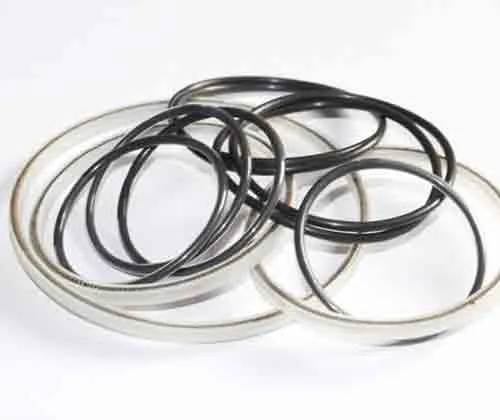
The stationary seat can be manufactured in different shapes and materials depending on the pump and operating conditions. Sealcon, for example, supplies stationary seats as well as sealing rings, springs, O-rings, sleeves, and glands.
How Do Mechanical Seals Work?
The working principle of a mechanical seal is based on two extremely flat surfaces running against each other.
When the pump starts, the rotating seal ring moves with the shaft while the stationary ring remains fixed. Spring force and fluid pressure push the two faces together. At the same time, a microscopic fluid film forms between them.
This film is critical. It provides lubrication and removes heat generated at the sealing interface while restricting the amount of fluid that passes through the interface.
As explained by John Crane's explanation of mechanical seal operation, wet mechanical seals rely on a very thin fluid film between the faces for cooling and lubrication. Therefore, the seal does not simply work by forcing two completely dry surfaces together.
Why Seal Face Materials Matter
The selection of mechanical seal stationary face material and rotating face material directly affects seal life and chemical compatibility.
Common materials include:
Seal Material | Typical Characteristics | Common Applications |
Carbon | Good running properties and low friction | Water and general pumps |
Silicon carbide | Excellent wear and corrosion resistance | Abrasive or corrosive fluids |
Tungsten carbide | High hardness and wear resistance | Heavy-duty applications |
Ceramic | Good corrosion resistance | Water and clean fluids |
PTFE | Excellent chemical resistance | Chemical applications |
Stainless steel | Mechanical strength and corrosion resistance | General industrial service |
A carbon ring seal, for example, is often selected because carbon offers good tribological properties. In chemically aggressive applications, a PTFE bellow seal or other PTFE-based design may be more suitable.
What Are the Different Types of Pump Seals?
There are many different types of pump seals, and selection depends on pressure, temperature, speed, fluid characteristics, shaft size, and leakage requirements.
Common water pump seal types and industrial configurations include:
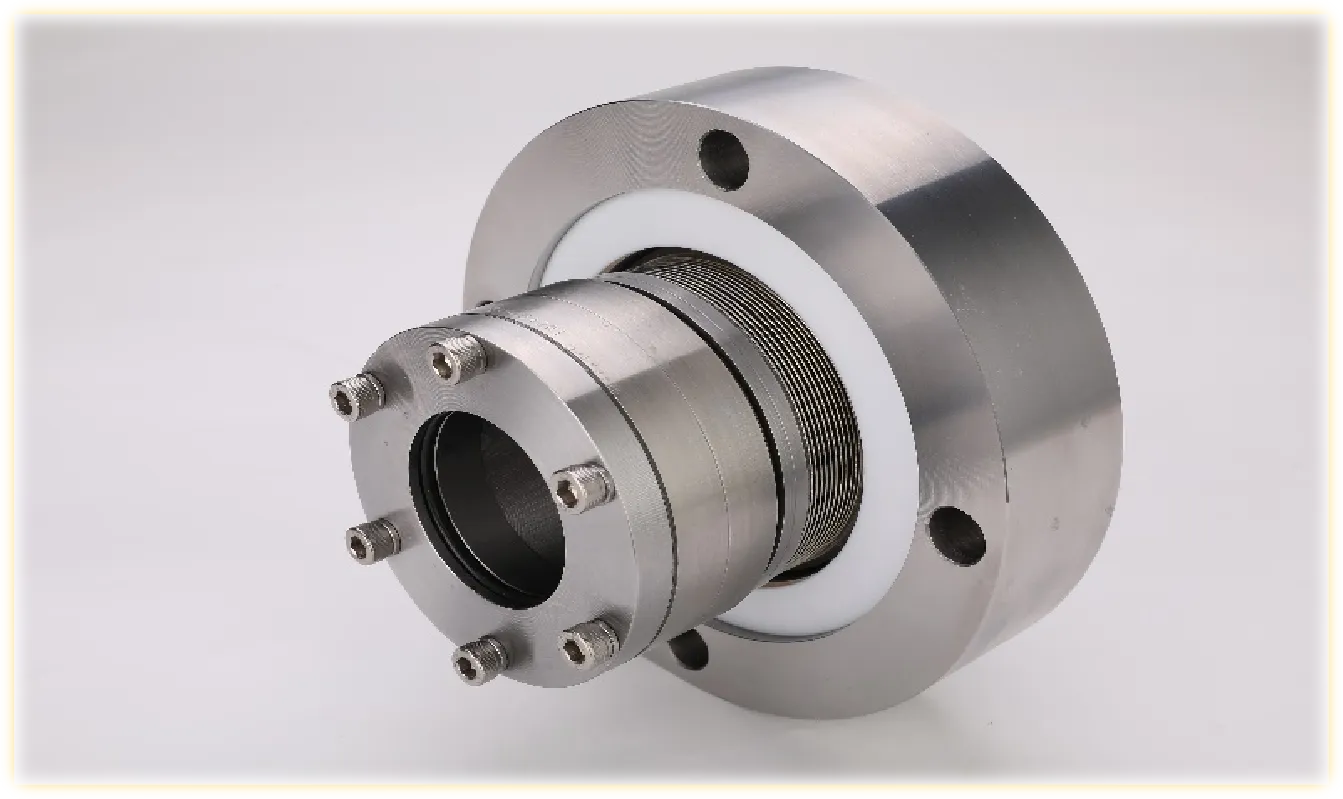
Bellows Mechanical Seals
A bellows mechanical seal uses an elastomer, PTFE, or metal bellows instead of conventional dynamic O-ring movement.
Elastomer bellows are widely used for general-purpose applications. PTFE bellows are particularly useful where chemical resistance is important. Metal bellows are often selected for high-temperature or demanding chemical services.
Cartridge Mechanical Seals
A cartridge seal is pre-assembled to simplify installation and reduce installation errors.
A double cartridge mechanical seal contains two sealing interfaces and a space between them for buffer or barrier fluid. This configuration can be used when improved containment or separation from the process fluid is required.
Single and Double Mechanical Seals
Single seals have one primary sealing interface. They are suitable for many conventional applications where the pumped fluid can provide adequate lubrication and leakage to atmosphere is acceptable.
Double seals use two sealing interfaces. Dual arrangements can use a buffer or barrier fluid between the two seals. A pressurized barrier system can prevent process fluid from escaping into the atmosphere.
The American Petroleum Institute's API 682 information identifies API 682 as the standard covering shaft sealing systems for centrifugal and rotary pumps.
Do Mechanical Seals Require Seal Water?
No. Mechanical seals do not always require seal water.
This is one of the most important points when selecting a mechanical seal. A wet mechanical seal needs an appropriate lubricating and cooling medium, but that medium does not necessarily have to be externally supplied water.
For many clean-water pump applications, the pumped liquid itself provides the necessary lubrication and cooling. In other applications, an external flush, quench, buffer fluid, or barrier fluid may be required.
When Is Seal Water Required?
Seal water or another external fluid may be needed when:
The process fluid provides insufficient lubrication.
The pumped medium contains abrasive particles.
The process fluid is too hot.
The process liquid may vaporize at the seal faces.
The fluid can crystallize, polymerize, or contaminate the seal.
The process fluid is hazardous and must be isolated from the atmosphere.
Additional cooling is necessary.
External flushing can create a cleaner and cooler sealing environment. Flowserve's mechanical seal piping plans describe arrangements where process or external fluids are circulated through the seal chamber for cooling, flushing, solids removal, or fluid control.
Therefore, the correct question is not simply whether a seal needs water. Instead, engineers should determine what fluid is required, where it should be supplied, and at what pressure and flow rate.
Mechanical Seal vs. Oil Seal
Mechanical seals and oil seals are both shaft sealing devices, but their designs and applications differ.
Feature | Mechanical Seal | Oil Seal |
Main sealing principle | Precision seal faces | Flexible lip |
Typical equipment | Pumps, compressors, mixers | Motors, gearboxes, rotating shafts |
Pressure capability | Generally higher | Usually lower |
Face materials | Carbon, SiC, ceramic, TC, etc. | Rubber, PTFE and elastomers |
Lubrication | Process or external fluid | Usually oil/grease environment |
Leakage control | Very low controlled leakage | Lip contact controls leakage |
The difference between oil seal and mechanical seal is therefore mainly related to construction, operating conditions, pressure capability, and sealing mechanism.
How to Select the Right Mechanical Seal
When choosing a china mechanical seal or other industrial seal, do not select solely by shaft diameter. Consider:
Fluid: Water, oil, chemicals, slurry, solvents, or other media.
Pressure: Seal chamber pressure determines the required sealing arrangement.
Temperature: High temperatures may require metal bellows or specialized materials.
Speed: Shaft speed affects heat generation and face loading.
Seal face materials: Select compatible combinations such as carbon/ceramic or carbon/SiC.
Seal arrangement: Choose single, dual, cartridge, or another configuration based on leakage and safety requirements.
Installation: Correct spring compression, alignment, cleanliness, and shaft condition are essential.
For demanding petroleum, chemical, and gas applications, API 682 provides requirements and recommendations for pump shaft sealing systems. API's official API 682 publication information explains that the standard covers sealing systems for centrifugal and rotary pumps and includes classifications for seal configurations.
FAQ About Mechanical Seals
What is a mechanical seal used for?
A mechanical seal is used to control leakage around a rotating shaft in pumps and other rotating equipment while allowing the shaft to rotate normally.
How does a mechanical seal work in a water pump?
The rotating and stationary seal faces form a controlled sealing interface around the pump shaft. A thin fluid film provides cooling and lubrication while limiting leakage.
Do mechanical seals require seal water?
Not always. Many seals use the pumped fluid for lubrication and cooling. External seal water or another flush/barrier fluid may be required when the process fluid cannot provide a suitable sealing environment.
What is a mechanical seal stationary seat?
The stationary seat is the fixed mating component against which the rotating seal face operates. Its material, shape, and dimensions must match the seal design and pump.
What is a PTFE bellows mechanical seal used for?
PTFE bellows are commonly selected for applications requiring strong chemical resistance. They are particularly useful when conventional elastomers are incompatible with the process fluid.
What is the difference between a single and double mechanical seal?
A single seal has one primary sealing interface, while a double seal has two. Double seals can use buffer or barrier fluid between the two interfaces and are often selected for hazardous, volatile, or difficult-to-seal fluids.
Related Blog
-
China Water Pump Spare Parts: Complete Guide to Water Pump Components and Parts List
-
Different Types of Pump Seals: A Complete Guide to Pump Mechanical Seal Types
-
Mechanical Seal Stationary Seat: Complete Guide to Stationary Parts Sealing and Seal Seat Selection
-
Flygt Pump Mechanical Seal Installation Guide: Choosing Compatible Replacement Seals for Flygt Pumps
-
How to Measure Mechanical Seal Size and Repair a Mechanical Seal
-
How to Replace a Mechanical Seal on a Water Pump