 English
 français
 Deutsch
 Español
 italiano
 русский
 português
 العربية
 ไทย
ไทย čeština
 Polska
Mechanical seals are essential components in pumps and rotating equipment because they prevent fluid leakage between rotating shafts and stationary housings. While rotary components receive much attention, the stationary side is equally important for maintaining sealing performance.
The mechanical seal stationary seat, also called a seal seat or stationary ring support, provides a fixed surface for the rotating seal face. Its design, material, and installation accuracy directly influence leakage control, wear resistance, and service life.
Understanding stationary parts sealing, including stationary faces, stationary rings, and seal seats, helps engineers choose suitable sealing solutions for different operating conditions.
As a professional sealing manufacturer, Sealcon provides mechanical seal components and customized solutions for water pumps, industrial equipment, and rotating machinery.
Overview
This guide explains what a mechanical seal stationary seat is, how stationary parts sealing works, common stationary ring and seal seat types, material selection, differences between stationary and rotary mechanical seals, application areas, maintenance tips, and how to choose a reliable seal seat company.
What Is a Mechanical Seal Stationary Seat?
A mechanical seal stationary seat is the non-rotating part of a mechanical seal assembly. It supports the stationary face and works together with the rotary mechanical seal face to create a controlled sealing interface.
A typical stationary sealing structure includes:
| Component | Function |
| Stationary seat | Supports and fixes the stationary face. |
| Stationary ring | Provides the fixed sealing surface. |
| O-ring stationary element | Prevents secondary leakage. |
| Retainer | Holds sealing components together. |
Unlike rotary components, the stationary seat remains fixed during operation and maintains alignment between sealing faces.
Proper material selection and component design are important for improving equipment reliability, especially in demanding environments. The National Association of Corrosion Engineers highlights the importance of material compatibility in corrosion-resistant applications.
Role of Stationary Parts Sealing in Mechanical Seals
The purpose of stationary parts sealing is to prevent leakage through the fixed side of the mechanical seal.
Maintaining Seal Face Stability
The stationary seat keeps the stationary face accurately positioned. Poor alignment may increase friction, wear, and leakage.
Supporting Pressure Resistance
During pump operation, the seal seat must withstand internal pressure without deformation.
Improving Sealing Performance
A high-quality stationary ring and seal seat help maintain stable contact with the rotary seal face, improving sealing efficiency.
Main Components of a Stationary Mechanical Seal
A stationary mechanical seal contains several precision components that work together. The accuracy of these mechanical seal stationary parts directly affects sealing performance.
| Stationary Mechanical Seal Part | Purpose |
| Stationary ring | Creates the fixed sealing surface. |
| Stationary seat | Provides structural support. |
| O-ring | Prevents leakage between components. |
| Seal face | Controls fluid leakage. |
| Retaining parts | Maintains assembly stability. |
Stationary Ring and Seal Seat Types
The stationary ring is one of the most important elements in stationary mechanical seal designs. Different structures are available depending on pump requirements.
| Stationary Seal Type | Features |
| O-ring stationary seat | Simple installation and replacement. |
| Rubber bellows stationary seat | Good flexibility and vibration compensation. |
| Cartridge stationary seat | Easy assembly and improved alignment. |
| Customized stationary ring | Designed for special operating conditions. |
An O-ring stationary design is widely used because it provides reliable secondary sealing and easy maintenance.
Mechanical Seal Stationary Face Material Selection
The mechanical seal stationary face material determines wear resistance, friction performance, and operating life.
| Material | Advantages |
| Carbon | Good lubrication and general compatibility. |
| Ceramic | Economical and wear resistant. |
| Silicon Carbide | Excellent corrosion resistance. |
| Tungsten Carbide | High strength for heavy-duty use. |
Material selection depends on:
Fluid characteristics
Temperature
Pressure
Pump speed
Chemical exposure
API Standard 682 recommends selecting mechanical seal materials according to operating conditions to improve reliability in centrifugal and rotary pumps.
Stationary Mechanical Seal vs Rotary Mechanical Seal
Although both components work together, their functions are different. A complete mechanical seal system requires both stationary and rotary components.
| Feature | Stationary Mechanical Seal | Rotary Mechanical Seal |
| Movement | Fixed | Rotates with shaft |
| Main Role | Supports sealing surface | Transfers rotation |
| Main Parts | Stationary seat and ring | Rotary face and drive components |
| Maintenance Focus | Alignment and material condition | Wear and rotation stability |
Proper coordination between stationary and rotary sealing components helps maintain stable face contact and improve sealing performance throughout the equipment lifecycle, as highlighted by the European Sealing Association.
How to Select the Right Mechanical Seal Stationary Seat?
Choosing the correct seal seat requires considering operating conditions and material compatibility.
Consider Operating Conditions
Important factors include:
Pressure
Temperature
Pump speed
Fluid properties
Shaft dimensions
Different applications require different stationary sealing designs.
Choose Suitable Materials
For example:
Ceramic is suitable for general water pumps.
Silicon carbide is preferred for corrosive fluids.
Tungsten carbide is used for high-load industrial applications.
A professional seal seat company should provide technical recommendations instead of only standard products.
Applications of Stationary Seals
Stationary seals are widely used in various industries where stable leakage control, material compatibility, and reliable pump operation are required.
Water Pump Applications
Stationary seats and rings are commonly used in water supply systems, cooling systems, and industrial circulation pumps.
Chemical Processing
Chemical applications require corrosion-resistant stationary faces and sealing materials to maintain reliable operation.
Food and Pharmaceutical Equipment
These industries require reliable sealing components with good hygiene performance and material compatibility.
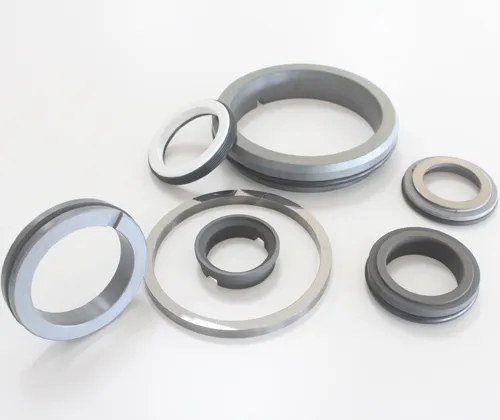
Why Choose Sealcon Stationary Seal Solutions?
When purchasing stationary sealing components, selecting an experienced manufacturer helps ensure product reliability, compatibility, and long-term sealing performance.
Sealcon provides:
Mechanical seal stationary parts
Stationary rings
Seal seats
Customized sealing solutions
Professional Manufacturing
Sealcon focuses on precision manufacturing and customized mechanical sealing products for different industrial requirements.
Customized Solutions
Customers can request solutions based on:
Pump model
Drawing requirements
Material specifications
Operating environment
This helps improve compatibility and reduce maintenance problems.
Maintenance Tips for Mechanical Seal Stationary Parts
Proper maintenance of mechanical seal stationary parts helps extend seal service life and reduce leakage risks.
Inspect Stationary Ring Condition
Regularly check surface damage, cracks, wear marks, and corrosion to identify potential seal failure risks.
Ensure Correct Installation
Proper installation includes cleaning sealing surfaces, checking alignment, and using correct O-rings.
Replace Damaged Components
Common replacement parts include stationary rings, seal seats, O-rings, and secondary sealing elements.
Regular inspection, accurate installation, and timely replacement of damaged stationary components can help improve mechanical seal reliability.
Need Mechanical Seal Stationary Seats or Stationary Rings?
If you are looking for mechanical seal stationary seats, stationary rings, O-ring stationary designs, stationary parts sealing solutions, or customized mechanical seal components, Sealcon can recommend suitable products based on your pump model, shaft size, fluid type, material requirements, and operating conditions.
Contact Sealcon to discuss your seal seat requirements, mechanical seal stationary parts, material selection, replacement options, and customized sealing solutions.
Contact SealconFAQs
What is a mechanical seal stationary seat?
A mechanical seal stationary seat is the fixed component that supports the stationary face and works with the rotary seal face to prevent leakage.
What is a stationary ring?
A stationary ring is the fixed sealing element that contacts the rotary face to create the sealing interface.
What materials are used for stationary faces?
Common materials include carbon, ceramic, silicon carbide, and tungsten carbide.
What is an O-ring stationary seal?
An O-ring stationary seal uses an elastomer ring to prevent leakage between the stationary ring and housing.
How do I choose a seal seat company?
Choose a supplier with manufacturing capability, material options, customization support, and technical experience.
Related Blog
Causes and Corresponding Measures of Mechanical Seal Leakage
Common Sealing Types of Gas Transportation
Application of Mechanical Seals
What Factors Can Cause Damage to the Cross-Section of Mechanical Seals?
How Much Do You Know About the Mechanical Seal Pressure Boosting System?