 English
 français
 Deutsch
 Español
 italiano
 русский
 português
 العربية
 ไทย
ไทย čeština
 Polska
Selecting the correct replacement is only the first step in mechanical seal maintenance. When a seal leaks or shows abnormal wear, technicians must determine whether the complete assembly needs replacement or whether selected components can be repaired or renewed. Accurate measurement is especially important when the original seal identification is unavailable.
Knowing how to measure mechanical seal size involves more than measuring the shaft diameter. The seal seat, gland, housing bore, installation length, and secondary sealing elements can all affect compatibility. Likewise, knowing how to repair mechanical seal components requires a careful inspection of the faces, springs, O-rings, sleeve, and other parts.
Why Accurate Mechanical Seal Measurement Matters
Mechanical seals are manufactured to specific dimensional relationships. A seal with the correct shaft diameter can still be unsuitable if its seat diameter, working length, or gland dimensions are different.
For example, John Crane's Type 58U installation documentation requires the seal to be positioned at a specified working length and explains that incorrect compression can result in leakage, dry running, or excessive face wear.
Therefore, technicians should record several dimensions rather than relying on one measurement.
Measurement | What to Measure | Why It Matters |
Shaft diameter | Diameter at seal location | Determines seal size |
Housing bore | Internal diameter of seal chamber | Confirms stationary fit |
Seat diameter | OD/ID of mating seat as applicable | Ensures seat compatibility |
Seal working length | Installed axial dimension | Controls compression |
Gland dimensions | Bolt circle and face dimensions | Confirms gland fit |
Sleeve diameter | OD of shaft sleeve | Determines secondary seal fit |
O-ring size | ID, cross-section, and profile | Prevents leakage |
Seal chamber depth | Available installation space | Confirms assembly clearance |
How to Measure Mechanical Seal Size
Step 1: Identify the Existing Seal
Before disassembling the pump, look for markings on the seal, gland, sleeve, or packaging. The manufacturer's name, seal series, size, or material code can make identification much easier.
If no identification is available, photograph the assembly and record its orientation. This is particularly useful for double cartridge seal designs, where several components may appear similar but have different functions.
A cartridge seal should not be measured only by its nominal shaft size. Working dimensions and gland configuration also need to be considered.
Step 2: Measure the Shaft or Sleeve
Use a calibrated micrometer or vernier caliper to measure the shaft diameter where the seal is installed.
Take measurements at several positions around the circumference and along the sealing area. Differences can reveal wear, scoring, or eccentricity.
If a sleeve mechanical part is fitted over the shaft, measure the sleeve rather than automatically using the underlying shaft diameter.
John Crane recommends inspecting the shaft for burrs, damage, and runout before mechanical seal installation because shaft condition directly affects sealing performance.
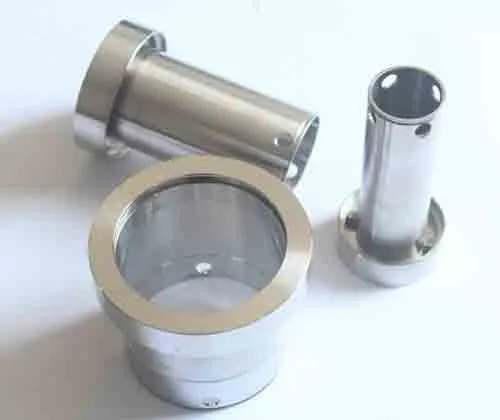
Step 3: Measure the Seal Seat and Housing
The stationary portion is commonly installed into the pump housing, gland, or seal chamber. Measure the relevant bore and seat dimensions carefully.
The mechanical seal seat must have the correct fit in its housing. If the seat is loose, distorted, cracked, or incorrectly sized, replacing only the rotating portion will not solve the leakage problem.
A ceramic mechanical seal seat, for example, should also be inspected for chips and cracks because ceramic is hard but relatively brittle.
Step 4: Measure the Working Length
Working length is one of the most important dimensions when selecting a replacement seal.
It describes the installed relationship between the seal components and determines how much the spring or bellows is compressed.
John Crane's Type 58U instructions specifically describe establishing a reference point on the shaft and then positioning the seal according to the required L3 working length.
Do not estimate this dimension visually. Record it before removing the original assembly whenever possible.
Which Mechanical Seal Parts Should Be Inspected?
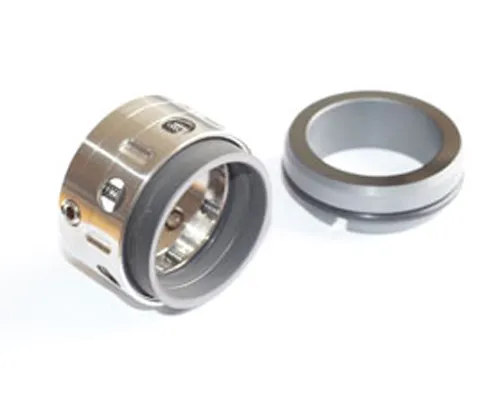
A mechanical seal is an assembly rather than a single component. During repair, inspect each mechanical seal part separately.
Mechanical Seal Rings
Inspect the rotating and stationary mechanical seal rings for scratches, chips, cracks, thermal damage, and uneven wear.
The sealing faces must remain extremely flat. Minor surface damage may sometimes be corrected through professional lapping, but deep damage generally requires replacement.
AESSEAL's refurbishment facilities, for example, use precision lapping and dimensional inspection for appropriate seal components and can replace hard faces such as ceramic, tungsten carbide, and silicon carbide.
Mechanical O-Rings
Inspect mechanical O rings for:
Cuts
Flattening
Swelling
Hardening
Cracking
Permanent deformation
An elastomer mechanical seal may use different O-ring materials depending on temperature and fluid compatibility. Never assume an old O-ring can be reused simply because it appears intact.
Springs and Bellows
Check springs for corrosion, distortion, breakage, or loss of elasticity. For a mechanical bellow, inspect the bellows for cracks, cuts, hardening, or permanent deformation.
Metal bellows require particular attention to fatigue or visible damage. If the bellows is damaged, repairing the complete seal assembly is generally safer than attempting an improvised repair.
How to Repair a Mechanical Seal
Clean and Inspect Before Repair
Disassemble the seal in a clean environment and keep components in their original order.
Clean deposits from metal parts without scratching precision surfaces. Record the failure condition before cleaning because deposits, discoloration, or wear patterns can provide clues about the cause of failure.
AESSEAL's seal examination process illustrates this approach by separating inspection into faces, elastomers, metallic components, and other parts before determining corrective action.
Replace Soft Components
O-rings, gaskets, and elastomer components are normally replaced rather than reused during refurbishment.
This is particularly important when the seal has been exposed to high temperature, chemicals, or long-term compression.
If the pump uses a mechanical seal gland plate, inspect its gasket and sealing surface as well. A new seal can still leak if the gland plate is damaged or incorrectly fitted.
Repair or Replace Seal Faces
Seal faces require the greatest care.
A face with light wear may be suitable for professional resurfacing or lapping, depending on the material and manufacturer's recommendations. Deep scratches, cracks, chips, or severe thermal damage generally require a replacement ring.
Do not manually polish precision faces with ordinary abrasive paper. This can destroy the required flatness and create another leakage path.
Inspect the Sleeve and Shaft
A worn shaft or sleeve can quickly damage a repaired seal. If the dynamic O-ring travels across a groove or rough surface, leakage may continue even after the seal faces have been restored.
A repair should therefore address the complete sealing environment, not only the visible failed component.
When Should You Repair or Replace the Complete Seal?
Condition | Recommended Action |
Damaged O-ring only | Replace O-ring |
Minor wear on reusable metal parts | Clean and inspect |
Lightly worn repairable face | Professional lapping may be possible |
Cracked ceramic ring | Replace ring |
Damaged carbon face | Usually replace or professionally refurbish |
Broken spring | Replace spring |
Damaged metal bellows | Replace seal assembly/component |
Severely worn shaft/sleeve | Repair or replace shaft/sleeve |
Unknown seal dimensions | Measure complete assembly before ordering |
Multiple worn components | Consider complete seal replacement |
A professional refurbishment can be economical when the seal contains expensive metallic components that remain usable. AESSEAL notes that refurbishment can include cleaning, assessment, replacement wear parts, new hard faces, and precision measurement.
Common Measurement and Repair Mistakes
Measuring Only the Shaft
The shaft diameter is important, but it is not enough to identify every seal. Seat dimensions, gland configuration, working length, and secondary seals also matter.
Reusing Damaged O-Rings
Old O-rings may look acceptable but can have permanent compression set or loss of elasticity.
Ignoring Shaft Wear
A new ceramic shaft seal or other seal face cannot compensate for a severely damaged shaft surface.
Mixing Components From Different Seal Designs
Components should not be mixed simply because they have similar dimensions. Springs, seats, rings, and secondary seals are designed as compatible assemblies.
FAQ About Mechanical Seal Measurement and Repair
How do I measure a mechanical seal?
Measure the shaft or sleeve diameter, seat dimensions, housing bore, gland dimensions, seal working length, and relevant O-ring dimensions. Record multiple measurements rather than relying on the shaft diameter alone.
Can a mechanical seal be repaired?
Yes, some mechanical seals can be refurbished. O-rings, gaskets, springs, and worn faces may be replaced, while suitable faces and metallic components may sometimes be professionally restored.
Can ceramic mechanical seal rings be repaired?
Minor surface wear may sometimes be professionally refinished, but cracked or chipped ceramic rings should generally be replaced.
What is the most important measurement for a mechanical seal?
There is no single universal measurement. Shaft size, seat dimensions, working length, housing dimensions, and seal configuration must be considered together.
How do I know which types of pump seals I have?
Check manufacturer markings first. If markings are unavailable, document the seal's dimensions, component arrangement, materials, and installation configuration before selecting a replacement.
Can I buy replacement parts separately?
For some seal designs, individual components such as O-rings, springs, seats, sleeves, and seal rings can be supplied separately. For highly integrated or cartridge designs, replacing the complete assembly may be more practical.
Related Blog
Flygt Pump Mechanical Seal Installation Guide: Choosing Compatible Replacement Seals for Flygt Pumps
The Difference Between Mixing Machine Mechanical Seal And Pump Mechanical Seal
-
China Water Pump Spare Parts: Complete Guide to Water Pump Components and Parts List
-
Different Types of Pump Seals: A Complete Guide to Pump Mechanical Seal Types
-
Mechanical Seal Stationary Seat: Complete Guide to Stationary Parts Sealing and Seal Seat Selection
-
Flygt Pump Mechanical Seal Installation Guide: Choosing Compatible Replacement Seals for Flygt Pumps
-
How to Measure Mechanical Seal Size and Repair a Mechanical Seal
-
How to Replace a Mechanical Seal on a Water Pump